U.S. Imperialists Weaponize COVID-19 Propaganda Against China
International labour migration and decent work
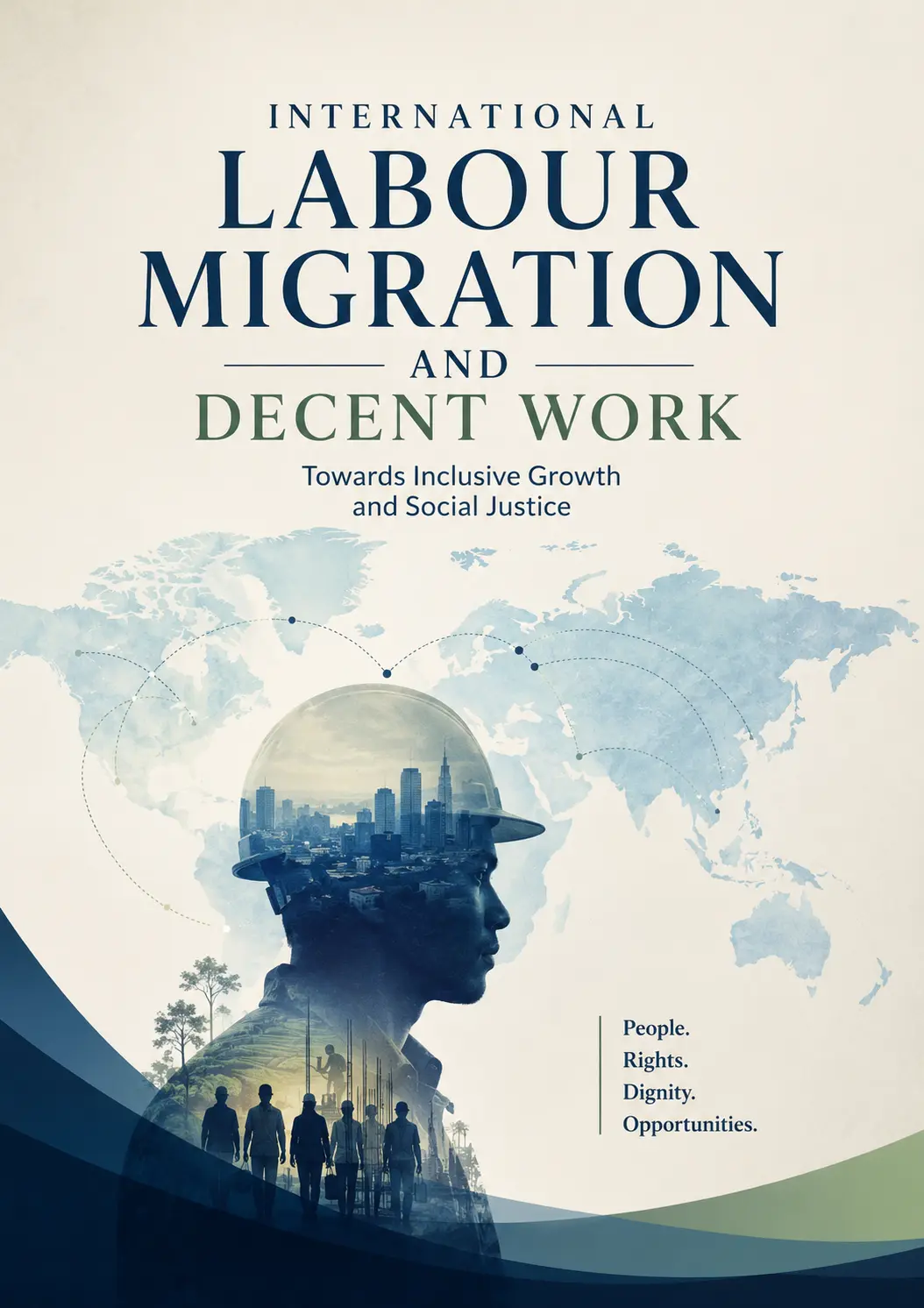
From the 1980s to the present, international labour migration has steadily expanded as demand for work has grown in both the global North and global South. As population growth has declined in the global North, demand for agricultural, construction, manufacturing, and care workers has increased. In the global South, the expansion of global production through the integration of global supply chains has fostered the formation of strategic logistical manufacturing hubs which require migrant labour from poorer regions of the global South to work in more affluent states in the global South and the global North. In particular, demand for low-wage labour has grown for agricultural, construction, manufacturing, platform, and care workers (Anderson et al. 2021; Deshingkar 2019; Kiesel & Dannenberg 2023; Parreñas et al. 2019; Paul & Yeoh 2021).
This chapter examines both how low-wage migrant labourers from the global South are intensely exploited and their significance in establishing an international decent-work agenda. These workers are among the most exploited labourers in the world and would benefit significantly if a decent-work agenda were adopted and implemented covering all workers, notwithstanding their documentation status. Clearly, if migrant workers from the global South were excluded from a decent-work agenda, it would shut out the most exploited and vulnerable workers who are deprived of the most elemental rights in workplaces of affluent destination states; states which require low-wage workers to fill job shortages that extract the highest levels of surplus value from workers. This chapter examines the initiatives to apply decent-work provisions to low-wage migrant labourers from the global South, and the challenges they face, despite being essential to destination states, from right-wing populism and xenophobia.
Labour mobility poses a significant challenge to workers from origin states as labour laws and regulations are not enforced in destination states and they are subject to dangerous workplaces, non-payment and underpayment of wages, poor housing, lack of health-care, and undocumented status. In particular, women, who comprise 41.5 per cent of 169 million international migrant workers, are commonly confronted with exploitation and abuse at workplaces in destination countries (ILO 2021).
The International Labour Organization (ILO) and multilateral agencies have developed an impressive agenda to improve labour conditions. However, while the global working class is larger than at any time in modern history, working-class organizations are in steep decline (van der Linden 2021). In some countries, the endeavours of ILO and civil society organizations (CSOs) to apply labour standards are challenged by the absence of viable existing trade unions and labour organizations.
DEMAND FOR MIGRANT WORKERS IN DESTINATION STATES
The absence of low-wage labour is the primary cause growing demand for foreign, temporary migrant low-wage labour in destination states. Migrant workers are recruited through labour brokers to work in destination states. In most instances, low-wage labourers work under exploitative conditions.
National and International Forces Expanding Migration
Declining fertility rates in the global North have pressed migrant workers to work in essential jobs in key sectors of destination economies: agriculture, construction, and care services. International migrant employment in crucial labour markets has sustained economic growth in Western Europe, North America, and emerging economies of the global South. Moreover, migrant workers tend to work in low-wage jobs which nationals have shunned, yet which are essential to serving the socio-economic requirements of destination states. However, migrant workers lack decent work and are denied equivalent social services. Migrant workers are recruited to work in temporary employment at a fraction of the wages paid to nationals in destination states. In Hong Kong, London, New York, Singapore, Tokyo, and other global financial centres, migrant workers from the global South fulfil essential functions in the domestic services and care sectors (Ness 2023; van Doorn et al. 2022).
In view of the expansion of temporary migrant labour, the significance of labour recruitment is central to advancing decent work, especially in low-wage destination states. In most instances, migrant workers are recruited in origin countries and lack any rights upon arrival in their destinations. Despite these restrictions, migrants move because of the opportunities offered in destination states; for example, in Hong Kong, Singapore, the Arab Gulf, and financial centres, migrant domestic workers can earn far more than professional workers in their home countries (Constable 2007; Ness 2018; Silvey & Parreñas 2020). Women working in domestic and care work are particularly prone to abuse and exploitation (Nizrane et al. 2020; Triandafyllidou 2022; Wee et al. 2019). In Hong Kong alone, about 350,000 young, women migrant domestics from the Philippines and Indonesia work in residential homes as care workers, nannies, and domestics. They are employed in about 20 per cent of Hong Kong homes and are typically subject to severe mobility restrictions while working in the homes of residents.
MIGRATION, NATIONAL TRADE UNIONS, AND THE DECENT-WORK AGENDA
The Covid-19 pandemic from 2020 to 2022 further jeopardized the well-being of migrant workers. Many have been forced to return home without payment of wages by their employers in destination states. Further, the living and work conditions of authorized temporary and undocumented migrant workers have grown more severe as destination states have not complied with regulations protecting migrant labourers. The rise of populism and xenophobia during the Covid-19 pandemic has exposed myriad migrant workers to abuse, exploitation on the job, arrest, detention, and deportation in regional and international destination hubs (Ansar 2023; Foley & Piper 2021; Kaur-Gill & Dutta 2023; Rajan & Akhil 2022).
In the aftermath of the Covid-19 pandemic, advancing migrant-worker rights and issues of representation have become an urgent requirement. Apart from origin-country diplomatic missions, trade unions and non-governmental organizations (NGOs) are indispensable in providing services and representation to promote the decent-work agenda. However, bearing in mind that trade unions are typically not in labour markets where migrant labourers are employed, they tend to neglect these workers. NGOs have often substituted for trade unions in identifying at-risk workers and addressing and mitigating the most abusive working conditions. Commonly, NGOs represent at-risk and defenceless populations, including women and youths in destination states (Ford 2019; Ness 2023).
National trade-union federations typically do not have the resolve or capacity to enforce labour regulations in destination states or to represent migrant workers. Trade-union representation has declined significantly or does not exist in destination states of the global South, especially states in Southeast Asia, the Gulf Cooperation Council (GCC) region, where migrant labour exploitation is rampant and education and enforcement of the decent-work agenda are inadequate or non-existent. Consequently, workers must rely on a limited number of human-rights CSOs as well as embassies of origin states to assist nationals working abroad who experience extreme exploitation and abuse on and off the job.
Precisely because temporary migrant workers are working in destination states for a defined period of not more than three years, trade unions do not have the incentive to represent low-wage temporary workers who will be compelled to return. Furthermore, in manufacturing industries where trade unions are present, migrant labourers are regarded by rank-and-file workers as undercutting wages and labour standards (Castles 2019). However, in the absence of meaningful state enforcement of fair wages, working standards, and living conditions, trade unions are essential for migrant workers. Thus, in destination countries where labour organizations are scarce or averse to representing temporary migrant workers, the ILO has become indispensable for educating trade unions on the significance of defending them. The ILO must encourage and compel labour unions to represent or at least mitigate the conditions of migrant workers. After the imposition of neo-liberal capitalism over the past 40 years, trade-union representation is often non-existent, and the ILO is the only global institution capable of monitoring migrant workers’ conditions. In view of the substantial wage theft during the Covid-19 pandemic, advocates for migrant labour have encouraged the ILO to promote policies to protect migrant labourers. The ILO has provided trade-union officials, staff, and stewards with training sessions to recognize how migrant-labour conditions can be improved, but it has insufficient resources. Weak unions in Malaysia, Thailand, the GCC, and other destination states must be urged to enforce wage payments to temporary workers from the global South (Foley & Piper 2021, 481).
Labour-union federations in the global South have also been pressed by the ILO to directly represent and defend migrant workers who are in physical and economic distress. Where implemented, this support was crucial in averting the terrible conditions which ensued during the Covid-19 pandemic. Moreover, as trade unions have declined worldwide over the last 50 years, fair terms and conditions of work have declined for both native-born and migrant labourers, allowing states to wantonly violate ILO Conventions for securing living wages, rights, and conditions of work. In the global North and developed member countries of the Organization for Economic Cooperation and Development (OECD), labour laws have been developed to improve migrant-labour conditions and prevent the trafficking of women, children and other vulnerable workers (Palmer & Small 2021), but in Southern states, trade unions are typically too weak to achieve equal measures of success, and wages and working conditions are much lower, even considering Purchasing Power Parity (PPP) and other measures. Moreover, the decline in Fordist production and expansion of precarious migrant labour compounds the difficulty of mobilizing workers into trade unions.
As the ILO’s decent-work agenda is central to global migration, the International Organization for Migration (IOM), a member of the United Nations (UN), has expanded its scope to include setting labour standards and rights for migrant workers from the global South. Piper and Foley stress the fundamental significance of decent work for both the ILO and IOM. Despite their separate origins, remit, and foundations, both organizations must work in partnership to advance and enforce ethical recruitment of migrant labourers (Piper & Foley 2021). Worldwide and especially in the South, precarious and informal labour have dominated national economies. Consequently, from 2000 to the present, forced labour and other forms of abuse have become endemic for most migrant workers from the global South, especially among the unskilled and women.
Migrant Labour and Global Production Chains
Globalization and the expansion of global supply chains (GSCs) have coincided with the decline in trade-union representation. Concomitantly, the erosion of wages and workplace conditions has pressured the ILO to take a more expansive role in governing workplace conditions, specifically in countries integrated into GSCs. GSCs employ an asymmetrically large share of migrant labourers to work in construction and manufacturing. As multinational companies and finance capital are increasingly dependent on global production chains, labour shortages have expanded the recruitment of migrant workers in key manufacturing industries in the global South where low-skilled migrant workers are exploited (Suwandi 2019). The Covid-19 pandemic has given rise to notorious forms of temporary-labour exploitation, notably as evidenced by forced labour in Malaysia’s medical glove manufacturing industry, where there was no trade-union presence (Hughes et al. 2022). In Special Economic Zones (SEZs), integral to GSC production, trade unions are typically scarce or non-existent. Consequently, the ILO is significant in recommending labour standards and promoting decent work (Thomas & Anner 2023). However, as the world has become globalized, ILO enforcement and governance are regarded as weak and incapable of protecting worker interests (Standing 2008).
As global production is reliant on GSCs which add value to industrial and consumer goods, migrant workers are increasingly recruited to countries with labour shortages. This is, in essence, a means to reduce the cost of production below national standards. For example, in Southeast Asia, temporary migrant workers, who are often undocumented, migrate from Bangladesh and Burma to Thailand to work in plastics and basic manufacturing; temporary migrant workers from Cambodia, Indonesia, Nepal, and Vietnam travel to Malaysia to work in electronics manufacturing, and more highly skilled workers migrate to Japan and South Korea to work in essential manufacturing industries. Temporary migrant workers are only permitted to stay for a designated period, perhaps three years, and if they overstay their visas, they are rendered undocumented and subject to arrest, detention, and deportation. Temporary migrant workers are denied the right to form their own labour organizations, and even if they join existing trade unions, they can never become permanent members as they will be forced to return to their origin states on completion of the visa. Even in the best of circumstances, in South Korea, migrant workers are almost always paid lower wages working for subcontractors of major industrial companies (Lee & Sobeck 2012). Consequently, temporary migrant workers are integral to the global neo-liberal economy where supply chains predominate, yet are typically denied decent work.
LABOUR MOBILITY AND PRECARIOUS WORK
Globalization and neo-liberalism have generated a growth in global labour migration. The primary forces contributing to labour migration are poverty and economic insecurity, climate change, and natural disasters. Temporary-labour migration is the most prevalent form of international mobility as governments establish bilateral agreements to ensure workers return to their origin states. In addition, from the 1980s to the present, Europe and the USA have prevented international migration, contributing to the significant growth of undocumented migration. Both temporary and undocumented migration have produced precarious jobs for most unskilled workers. Meanwhile, the institutions created by states to ‘manage migration’ are intended to fulfil labour requirements without providing workers with decent work. It is important to point out that both temporary and undocumented migrants provide necessary work in destination countries labouring in agriculture, construction, manufacturing, gig services, and care work, usually at a fraction of the wages paid to native-born workers.
Internal and international migration are crucial to national and global production and service requirements. However, migrant workers are mostly exploited at destination countries and are not protected by the decent work agenda. Low-wage migrant labourers who engage in direct action and strikes and form associations, and independent unions with the support of CSOs and newly organized unions, have on the whole achieved improved conditions. However, their organizations are small and ineffective in bargaining and enforcing wages, and frequently disappear (Alberti & Però 2018; Ness 2005; Però 2020). Further, this chapter asserts that migrant labourers lack representative organizations to defend their interests. Increasingly, the ILO, IOM, and global international organizations recognize the importance of decent work in both origin and destination states if the Sustainable Development Goals (SDGs) are to be achieved (Dhakal & Burgess 2021). Nonetheless, multilateral agencies are customarily unable to impose regulations on unwilling states.
INTERNAL MIGRATION AND PRECARIOUS WORK
In 2013, the United Nations Department of Economic and Social Affairs (UNDESA) estimated that the global population of internal migrants living outside their region of birth was 763 million (UNDESA 2013). From 2005 to 2020, based on UN and World Bank population estimates, accelerated urbanization has only increased global internal migration, and a conservative estimate is that more than 1 billion people live and work outside their regions of birth. The two major countries of internal migration in the last 30 years are China and India, but for different reasons. In China, the primary force behind migration is industrialization and modernization of the economy. In India, urban migration is mainly a result of workers’ inability to survive in rural areas (due to lack of land) and through subsistence farming. As a result, they are forced to work in low-wage industries in urban areas and Economic Promotion Zones, where wages are far lower than their counterparts in other parts of India. The 2011 Indian Census estimated that the country had 450 million internal migrants, an increase of 45 per cent from the 2001 Indian Census. Data for the 2021 Indian Census is unavailable. However, the Indian government estimates that internal migration has grown from 30 per cent in 2001 to 37 per cent in 2011 (Rajan & Bhagat 2021).
In South Asia and the global South, internal migration is typically fuelled by the displacement of rural workers from arable land in the countryside and relocation to major metropolitan urban areas in the global South. The primary causes of internal migration are economic displacement, civil war and conflict, and climate change. Most internal migrants live under exceptionally precarious conditions, often lacking housing, sanitation, clean water, electricity, and social services. Sociologist Jan Breman has characterized rural–urban migrants as ‘footloose labour’: labourers who lack permanent employment and are compelled to work in a range of jobs in construction, manufacturing, and home-care services (Breman 1996; also in this volume). Despite the overwhelming share of labourers who are internal migrants, few, if any, international human-rights CSOs address their socio-economic needs. Less than 10 per cent of India’s workforce have formal employment. They are paid exceedingly low wages, lack benefits and can be dismissed any time for any reason.
Internal Migrant Labour in China and India
Internal migration does not always lead to poverty and lack of decent work. According to a recent study on China, strong trade unions correlate with good working conditions and job satisfaction in the manufacturing sector. China’s remarkable model of generating decent work among internal migrants is corroborated through quantitative survey research which found that decent work is achieved when rural–urban manufacturing workers voluntarily choose their workplace (Han et al. 2022). Moreover, support from the municipal branch of the All-China Federation of Trade Unions (ACFTU) has reinforced and advanced the satisfaction of migrant workers employed in state-owned enterprises through strengthening their capacity to improve their socio-economic status and improve labour conditions on the job. Decent work remains a significant problem in the burgeoning finance-driven private sector, especially the platform economy, as inequality grows due to greater precariousness (Qi & Li 2020).
However, in most global South countries, trade unions are absent or ineffective in improving worker rights. By contrast, trade-union centres in India’s major cities lack the capacity to challenge employers to enforce decent-work rules, as the Indian federal, state, and urban governments fundamentally oppose unionization. In most instances, most urban manufacturing workers do not even have access to workplace health and safety. In Delhi’s Wazirpur Industrial District, 600 hot-and-cold rolling steel mills employ approximately 10,000 workers, who operate machinery on two shifts, 24 hours a day, producing stainless steel kitchenware for the Indian and international markets. Almost all the workers are migrants from rural regions of Northern India who are unable to survive in the countryside. Workers are lucky to earn $10 a day. Workers labour under strenuous and dangerous conditions and (owing to the primitive production machinery) are subject to serious injury and even death. Rarely does a day pass without a worker being killed by exploding steel pellets in the production process. Child labour is ubiquitous, and living conditions are cramped and lack water and electricity (Dogra 1989; Ness 2021; PUDR 2014). While trade unions have periodically attempted to organize these workers, they have been opposed by the employers and the Chief Minister of Delhi. Although the workers have a union (Bigul Mazdur Dasta), significant wage increases and improvement of conditions which would approach decent work are fiercely opposed by mill owners and government. Wazirpur is typical of most manufacturers, not the exception to the rule, and ILO conventions are ignored (Ness 2016).
As such, the decent-work agenda is a chimera for most unskilled migrant workers in the global South. Governments may sign on to conventions, but employer violations and abuses are common and rarely penalized by law enforcement.
MIGRANT LABOUR AND THE COVID-19 PANDEMIC
The precarious fate of international migrant workers was especially apparent during the Covid-19 pandemic, when migrant workers were politically vulnerable to policy decisions in destination states. The scholarly literature suggests that migrant workers were far more at risk during the pandemic, as national policies circumvented their health-and-safety needs. The conditions of migrant workers during the pandemic were made worse by foreign workers being sent back to their home countries without payment of wages by their employers (Foley & Piper 2021).
Migrant workers are typically recruited to work in arduous and hazardous jobs which are essential for profitability because wages and working conditions are so poor. Notably, this occurred from the outset of the Covid-19 pandemic when local populations in destination countries stayed at home and were comparatively safe. For instance, in major cities of the global North and major financial centres across the world, migrant workers frequently worked in critical services, including emergency medical services, and as nurses in health-care facilities. Moreover, the closure of restaurants and other businesses pressed migrant workers into dangerous jobs transporting food and other household products to the homes of native-born workers.
As many people in urban areas stayed away from work, and rarely ventured out from home for shopping and eating, the importance of gig workers to deliver food and household supplies through Deliveroo, Uber Eats, and other platform services significantly increased. As many stopped using public transport, most taxi and for-hire vehicle drivers were migrant workers who met essential needs (Leung 2022; Riordan et al. 2022; van Doorn 2022). Paradoxically, though migrant workers provided essential health-care services and delivered essential goods, exposing them to infection during the Covid-19 pandemic, they were typically the last to receive vaccines and medical treatment (Berardi et al. 2022; Burns et al. 2022). The absence of medical treatment among migrant workers in the global North was accompanied by the absence of decent work, including low wages, poor living conditions, and, for many undocumented labourers, the threat of arrest, detention, and deportation (Morgan 2022).
DECENT WORK AND INTERNATIONAL MIGRATION
From 1990 to the present, the estimated number of international migrants has increased threefold. From 1990 to 2022, the estimated number of migrants living in a country other than the one of their birth increased from 153 million to 283 million (IOM 2022).
In their public reports, the IOM, World Bank, and other multilateral agencies repeatedly strive to minimize the growth in migration, asserting that its percentage increase has not been significant during this time. However, playing down the number of migrants does not improve their conditions. In fact, labour migration has grown extensively in absolute numbers and as a share of the global population, and low-wage migrant workers are highly beneficial in contributing to economic growth and social needs (IOM 2022). The IOM and other CSOs seek to diminish the significance of international migration to deflect the growth of populism and xenophobia, which have significant consequences for public opinion and policy decisions within nation states. Undeniably, dismissal of the actuality of international migration’s rise works to the detriment of migrants themselves, leading to the failure to provide adequate social services and protection, and does not reduce populism and xenophobia among native populations in destination states. Instead, CSOs and multilateral agencies supporting the rights of migrants must recognize the growth of migration and its contribution to economic growth and the addressing of social needs in destination states. Still worse, denial of both the expansion of migration and migrants’ contribution to society deflects policy attention to address the immediate and long-term needs of migrant workers, including decent jobs, and support for origin states.
THE ILO DECENT WORK AGENDA FOR MIGRANT LABOUR
Initiatives to mitigate and improve migrant-labour conditions to comply with the decent-work agenda have been disseminated by CSOs, including the ILO, some national labour federations, and bilateral agreements between origin and destination states, and through efforts to convince destination states to enforce the Global Compact for Migration (GCM) programme. The ILO considers protecting the rights of migrant workers and refugees as integral to safeguarding labour standards and conditions for all workers.
The ILO Decent Work Agenda for migrant workers and refugees is directly linked to the 2030 SDGs, a UN plan to substantially reduce food insecurity, poverty, and inequality through increasing economic development in poor countries of the global South. SDG 8 calls on promoting sustained, inclusive, and sustainable economic growth, full and productive employment, and decent work for all. SDG 8:8 directly calls on stakeholder nations to secure decent-working environments for migrant workers, especially women migrants and the vast majority of the world’s population working under precarious conditions (ILO n.d.-a).
In addition, SDG 10:10 calls for the reduction of global inequality, including 10:7, and will advance the rights of migrant workers if the GCM is adopted by nation states to ‘facilitate orderly, safe, regular and responsible migration and mobility of people, including through the implementation of planned and well-managed migration policies’ (SDG 10:7).
Furthermore, the ILO’s Decent Work Agenda for migrant labourers calls for reducing the transaction cost of sending remittances to below 3 per cent by 2030 (target 10: c). Today, transferring remittances often costs migrant workers upwards of 5 per cent of the money sent (ILO n.d.-a).
While the measures adopted by the ILO to provide decent work for migrant labour are an encouraging development and sentiment, the growth of populism and xenophobia in destination states amid the Covid-19 pandemic demonstrates that the conditions of migrant workers have regressed and no mechanism or agency exists to protect them.
THE GLOBAL COMPACT FOR SAFE, ORDERLY AND REGULAR MIGRATION AND DECENT WORK
On 13 July 2018, the UN convened a meeting in Marrakech, Morocco to address and improve the abysmal conditions that migrants confront when traversing borders and working in destination states. The GCM objective was to create an international system of migration rights which all states would support and put into operation.
We commit to adapt options and pathways for regular migration in a manner that facilitates labour mobility and decent work reflecting demographic and labour market realities, optimizes education opportunities, upholds the right to family life, and responds to the needs of migrants in a situation of vulnerability, with a view to expanding and diversifying availability of pathways for safe, orderly and regular migration. (GCM 2018)
At the meeting, 162 countries voted in favour of its passage. However, despite the high hopes, the GCM has been ignored by most states, who view the agreement as ceding sovereignty on the governance of labour mobility to the UN and an international legal system.
On 19 December 2018, the GCM was ratified by the UN. Of the 165 UN member countries present at the General Assembly session, 152 voted in favour of ratification. But despite the overwhelming support for the GCM, the USA notably registered opposition to the agreement. In addition, Austria, Hungary, Czech Republic, Poland, and Israel voted against the GCM accord while five European countries abstained: Austria, Bulgaria, Italy, Latvia, and Romania. After passage of the GCM at the UN General Assembly, the legislature of Belgium voted in opposition to the accord. According to migration scholar Antoine Pécoud, the GCM, principally drafted as a ‘depoliticised document’ is highly politically contentious and ‘marked by major internal contradictions. In effect, the attempt by proponents of safe, orderly and regular migration that ensures decent work to write the GCM in apolitical terms, did not anticipate the extensive political fallout from opponents of migration’ (Pécoud 2021).
The timing of the GCM, just three years after the outpouring to Europe of refugees displaced by North American and European-sponsored wars in the Middle East was viewed as a leading factor in the expanding popular and political opposition to the international accord (Badell 2020). European and US disapproval reflects the levels of public opposition to the GCM effort to apply a human-rights perspective on international migration (Boucher & Gördemann 2021). Consequently, even after the GCM was passed, the document has not been enforced by destination states, who have bypassed the international agreement for bilateral agreements between origin states and destination states which do not protect migrant labourers. Moreover, due to the economic desperation in the global South, unauthorized migration continues across militarized borders in Europe and North America, exposing migrants to significant danger. A substantial segment of workers in rich destination states remains undocumented migrants employed in five key sectors: agriculture, construction, manufacturing, home care, and logistics.
Notwithstanding the opposition to the GCM among rich destination states, it must be noted that the language of the GCM is embedded in terminology intended to facilitate the recruitment and migration of foreign migrant labour while placating the growth of xenophobia and the expansion of border control in the global North to ensure only necessary labourers are permitted to enter rich destination states. Raúl Delgado Wise observes that the GCM ignores the hardship and abuse migrants must endure:
At the heart of the debates is an attempt to reconcile two irreconcilable positions: a human-rights centred approach and the securitization question which reaffirms the right of states to criminalize migrants under the façade of the right of states to control ‘illegal’ migration. (Delgado Wise 2022, 8)
Thus, Delgado Wise correctly demonstrates that in spite of all good intentions, multilateral organizations and CSO proponents of the GCM minimize neo-liberal capitalism’s rapacious demand to expand migration to increase surplus value and support high living standards in the global North. Accordingly, the GCM is incapable of realizing the obligations of the decent-work agenda.
RECRUITMENT OF MIGRANT LABOUR FOR DECENT WORK
The ILO and migration scholars consider cross-border recruitment essential to generating and preserving decent work. The recruitment process for temporary migrant labour is a complex network of government agencies, formal and informal networks, employment agencies, and labour recruiters working across borders in what Xiang and Lindquist have designated a ‘migration infrastructure’ (Xiang & Lindquist 2014). Considering that most states do not abide by the terms of the GCM, it is important to enforce bilateral, temporary migration agreements between states to advance the Decent Work Agenda and SDG goals.
Migration agents in origin countries often victimize low-skilled workers who are searching for work, charging exorbitant recruitment fees and misleading them about working and living conditions in destination states. Prospective migrant workers are not informed that employers in some destinations require the seizure of passports and charge exorbitant fees for living expenses, fundamentally fashioning a system of debt bondage.
Although a growing number of origin and destination states, especially in Asia, have advanced bilateral agreements, temporary migrant-labour conditions remain difficult to enforce and require vigilance among both sending and destination states. As a destination state, South Korea maintains a comprehensive enforcement system which protects the rights of both temporary and undocumented migrant workers and provides social and emergency services to those at risk (Kwak & Wang 2022; Williamson et al. 2021).
Considering the widespread abuses of temporary workers in many destination states, it is incumbent on destination states to enforce bilateral agreements and abide by the decent-work agenda. To address widespread abuses in temporary-labour recruitment, the ILO formed a Fair Recruitment Initiative (FRI) requiring governments, employers, and private businesses as well as labour unions to develop a plan to protect and improve the rights and conditions of migrant workers (ILO n.d.-a). The FRI is built on ‘four pillars’: (1) enhancing global knowledge of recruitment; (2) improving laws, policies, and enforcement mechanisms; (3) promoting fair business practices; and (4) empowering and protecting all workers through workers’ organizations (ILO n.d.-b).
The fourth pillar is significant, as the ILO is unable to establish and enforce the first three pillars, which require the willingness of business to abide by a fair recruitment process, a high bar to achieve. The ILO has advanced legislation and offered training and instruction on best practices, but workers’ organizations and trade unions are all too frequently either unwilling to pressure governments to enforce laws protecting temporary migrant labour or, in a growing number of cases, do not exist at a local level. In September 2016, the ILO convened a Tripartite Meeting of Experts to Develop Guidance on Fair Recruitment. The FRI covers recruitment for both native-born and migrant labour. Although the ILO has had some success in educating workers and states on fair recruitment practices, since 2016, abuses in the recruitment of migrant labour have multiplied in all three major migration corridors: Southeast Asia, Europe, and North America. The non-adherence to ILO recruitment standards is evinced in reports by CSOs and whistle-blowers, as well as direct observation of practices in destination states (Foley & Piper 2021). Consequently, the ILO faces the challenge of convincing nation states to enforce its conventions: in this case, the ILO’s Private Employment Agency Convention of 1997. It is uncomplicated to develop international labour legislation but far more complicated to enforce and apply conventions, especially when incentives exist for businesses to ignore ILO legislation and nation states are unable or unwilling to enforce ILO conventions.
CONCLUSION
The evidence of international migrant workers’ significant presence exposes the disservice of dismissing their presence and contribution to Western European and North American economies and economies of destination states worldwide. Additionally, the minimalizing of migrant workers’ contribution to destination states degrades the need to provide them with essential services during crises and pandemics, and contributes to the persistence and extension of abusive recruitment practices. It is essential that migrant labourers are taken into account if the Decent Work Agenda is to be extended throughout the world. Destination states in the global North are opposed to applying the Decent Work Agenda to undocumented and irregular workers, who, lacking legal rights, have no choice but to continue working under dangerous, exploitative, and abusive conditions. Undocumented workers comprise most of the migrant labour workforce in the USA and a growing share of workers in Europe, Southeast Asia, and even Southern Africa. Moreover, internal migrant labourers are also subject to these same conditions in countries of South Asia and beyond. In the absence of legal rights and under circumstances of rapidly growing populist xenophobia, the ILO must confront significant challenges in applying its conventions.
Recent News